
New London COUNTY · Railroads and preservation
Union Station: A Railroad Gateway Saved in the 1970s
Exterior and interior photographs from 1971 and 1975 trace the architecture of New London’s Richardson-designed station during its preservation years.
Historical focus · 1885–1975
LOOK CLOSER · OPEN ANY IMAGE
The story in photographs
1971
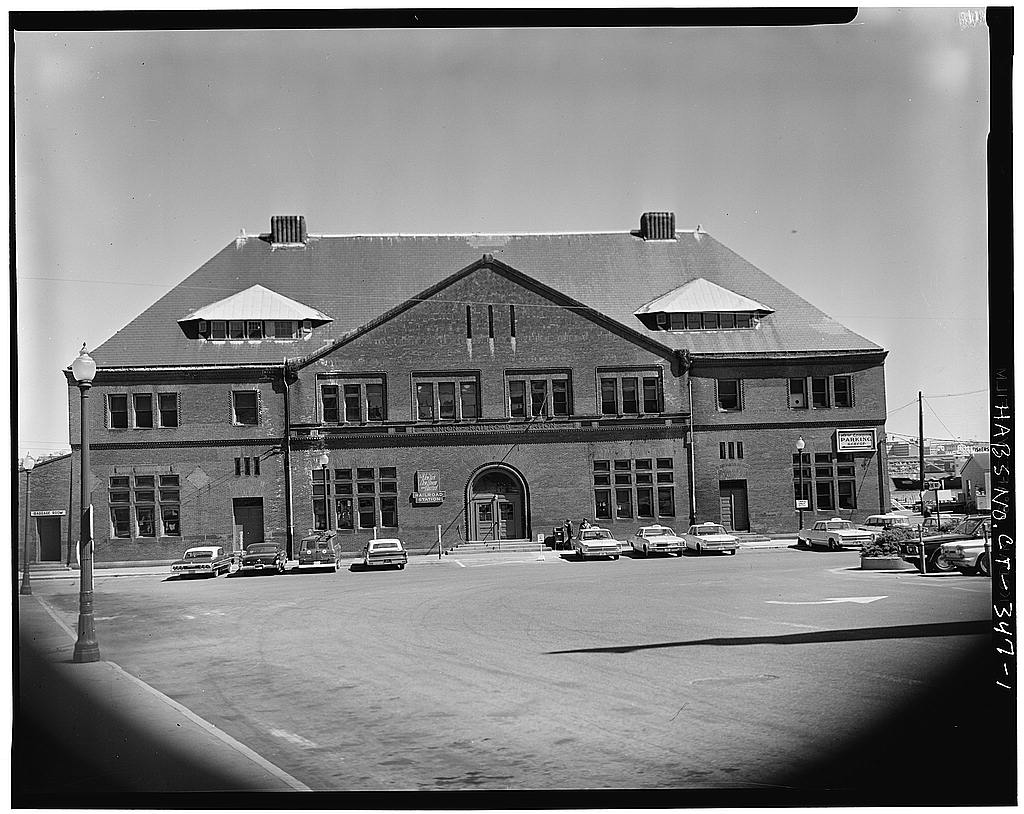
Exterior, west elevation
Exterior, west elevation — New London Railroad Station, State Street Vicinity, New London, New London County, CT
Image credit & source
Robert E. Fulton III; Library of Congress, Prints and Photographs Division, HABS/HAER.
No known restrictions on images made by the U.S. Government; images copied from other sources may be restricted.
Original source · Reuse terms1971
Exterior, south and east elevation
Exterior, south and east elevation — New London Railroad Station, State Street Vicinity, New London, New London County, CT
Image credit & source
Robert E. Fulton III; Library of Congress, Prints and Photographs Division, HABS/HAER.
No known restrictions on images made by the U.S. Government; images copied from other sources may be restricted.
Original source · Reuse terms1971
Detail of chimney in attic
Detail of chimney in attic — New London Railroad Station, State Street Vicinity, New London, New London County, CT
Image credit & source
Robert E. Fulton III; Library of Congress, Prints and Photographs Division, HABS/HAER.
No known restrictions on images made by the U.S. Government; images copied from other sources may be restricted.
Original source · Reuse terms1971
Detail of attic truss
Detail of attic truss — New London Railroad Station, State Street Vicinity, New London, New London County, CT
Image credit & source
Robert E. Fulton III; Library of Congress, Prints and Photographs Division, HABS/HAER.
No known restrictions on images made by the U.S. Government; images copied from other sources may be restricted.
Original source · Reuse terms1971
Interior, waiting room
Interior, waiting room — New London Railroad Station, State Street Vicinity, New London, New London County, CT
Image credit & source
Robert E. Fulton III; Library of Congress, Prints and Photographs Division, HABS/HAER.
No known restrictions on images made by the U.S. Government; images copied from other sources may be restricted.
Original source · Reuse termsApril 1975
General view of west facade (left) and south track-side facade (right)
General view of west facade (left) and south track-side facade (right) — New London Railroad Station, State Street Vicinity, New London, New London County, CT
Image credit & source
Jack E. Boucher; Library of Congress, Prints and Photographs Division, HABS/HAER.
No known restrictions on images made by the U.S. Government; images copied from other sources may be restricted.
Original source · Reuse termsApril 1975
Detail of dormer in east end of roof, south facade
Detail of dormer in east end of roof, south facade — New London Railroad Station, State Street Vicinity, New London, New London County, CT
Image credit & source
Jack E. Boucher; Library of Congress, Prints and Photographs Division, HABS/HAER.
No known restrictions on images made by the U.S. Government; images copied from other sources may be restricted.
Original source · Reuse termsApril 1975
South elevation with passenger shed in foreground
South elevation with passenger shed in foreground — New London Railroad Station, State Street Vicinity, New London, New London County, CT
Image credit & source
Jack E. Boucher; Library of Congress, Prints and Photographs Division, HABS/HAER.
No known restrictions on images made by the U.S. Government; images copied from other sources may be restricted.
Original source · Reuse termsApril 1975
Oblique view of passenger entrance in north facade
Oblique view of passenger entrance in north facade — New London Railroad Station, State Street Vicinity, New London, New London County, CT
Image credit & source
Jack E. Boucher; Library of Congress, Prints and Photographs Division, HABS/HAER.
No known restrictions on images made by the U.S. Government; images copied from other sources may be restricted.
Original source · Reuse termsApril 1975
Interior detail customer counter in baggage room
Interior detail customer counter in baggage room — New London Railroad Station, State Street Vicinity, New London, New London County, CT
Image credit & source
Jack E. Boucher; Library of Congress, Prints and Photographs Division, HABS/HAER.
No known restrictions on images made by the U.S. Government; images copied from other sources may be restricted.
Original source · Reuse termsApril 1975
General interior view of ticket counter and waiting room
General interior view of ticket counter and waiting room — New London Railroad Station, State Street Vicinity, New London, New London County, CT
Image credit & source
Jack E. Boucher; Library of Congress, Prints and Photographs Division, HABS/HAER.
No known restrictions on images made by the U.S. Government; images copied from other sources may be restricted.
Original source · Reuse termsTHE STORY BEHIND THE PHOTOGRAPHS
People, places, and change.
A new station after the fire
A fire destroyed New London’s earlier depot in 1885. The replacement was planned for the New Haven Railroad and the New London Northern, later associated with the Central Vermont system. Henry Hobson Richardson designed the new station, and his successors Shepley, Rutan and Coolidge completed the work after his death. It opened in 1887. Its location beside the tracks and harbor made it a gateway between the city and a transportation network extending beyond southeastern Connecticut. The building gave a permanent architectural presence to journeys, arrivals, and connections. [4]
Architecture made for passengers
The Historic American Buildings Survey records a red-brick building with a prominent hipped roof and a projecting upper story. Inside, the waiting room rises through the main volume beneath substantial roof framing. Photographs include the public interior, ticket counter, attic trusses, and the platform side. These views make the station legible as a working building: passengers needed a place to wait, buy tickets, orient themselves, and pass toward the trains. The large room and its surrounding service spaces organized those activities while the roof and masonry gave the small urban station a distinctive silhouette. [2] [3]
The campaign to keep it standing
Declining passenger business after the Second World War placed many older railroad buildings under pressure. The New Haven Railroad entered Penn Central in 1969, and Union Station faced a demolition threat. National Register listing followed in 1971. A preservation trust formed in 1973, and Union Station Associates, led by architect George Notter, purchased the building in 1975. Restoration retained a railroad use. This sequence matters because the station’s survival resulted from specific organizational and ownership decisions during the years represented in the photographic record. [4] [5]
Two photographic visits
The survey’s photograph index distinguishes Robert E. Fulton III’s 1971 images from Jack E. Boucher’s April 1975 work. Together they provide a close view of the building during the period when its future was being decided. Exterior photographs place the brick walls, roof, and trackside elevations in their urban setting; interior views preserve fittings and structural details that a distant postcard would miss. The photographs can be compared as architectural evidence without assuming that every visible feature survived later restoration. Each image retains its own date and original archival caption. [3] [1]
Sources & further reading (5)
Keep the sources close.
Download this collection’s notes, timeline and image credits. Photographs link to their original archives and require an internet connection.
Building dates and photograph dates are recorded separately. Later photographs are identified in their captions; unknown exposure dates remain unknown. Follow each image’s credit and reuse terms.