
Hartford COUNTY · Industry & labor
New Britain at Work: Gordon Parks’s 1943 Photographs
Factory inspection, transport, childcare and street life reveal the home front beyond the assembly line in the Hardware City.
Historical focus · 1942–1943
LOOK CLOSER · OPEN ANY IMAGE
The story in photographs
1943 May.
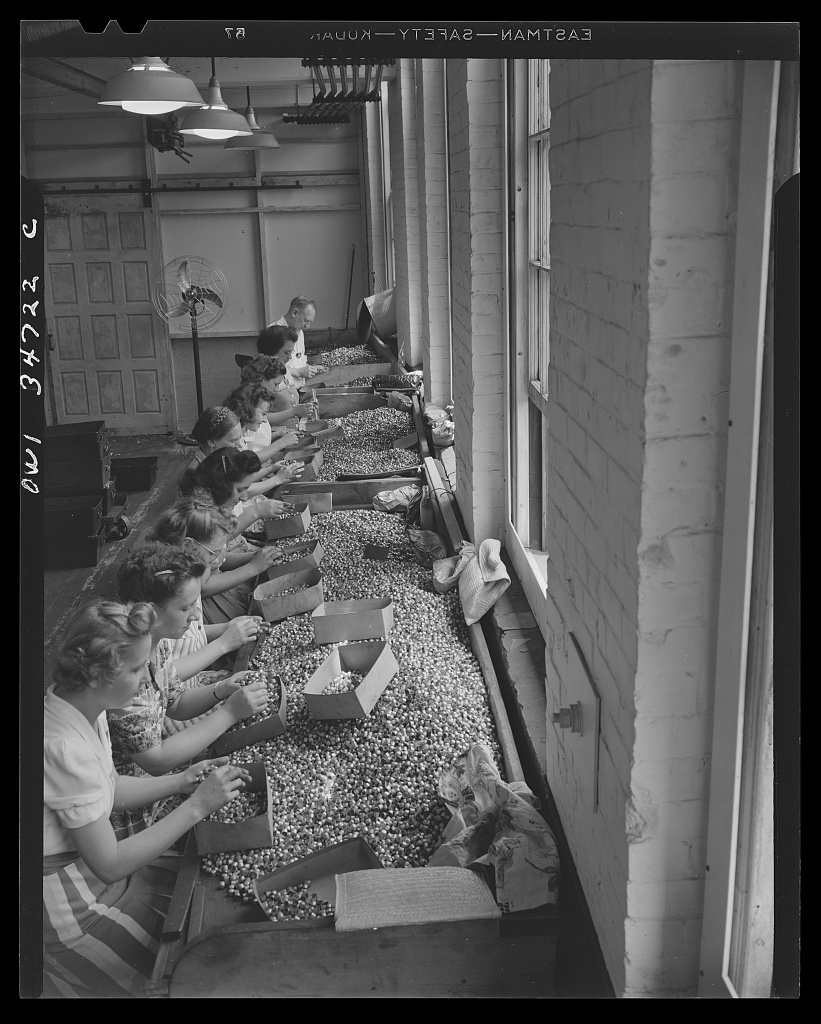
Inspecting bullet jackets at the Stanley plant
Inspecting bullet jackets at the Stanley plant — 1943 May.
Image credit & source
Parks, Gordon, 1912-2006 / Library of Congress, Prints and Photographs Division
No known restrictions. For information, see U.S. Farm Security Administration/Office of War Information Black & White Photographs http://www.loc.gov/rr/print/res/071_fsab.html
Original source · Reuse terms1943 May.
New Britain street scene
New Britain street scene — 1943 May.
Image credit & source
Parks, Gordon, 1912-2006 / Library of Congress, Prints and Photographs Division
No known restrictions. For information, see U.S. Farm Security Administration/Office of War Information Black & White Photographs http://www.loc.gov/rr/print/res/071_fsab.html
Original source · Reuse terms1943 June.
Equipment inspection at Landers, Frary and Clark
Equipment inspection at Landers, Frary and Clark — 1943 June.
Image credit & source
Parks, Gordon, 1912-2006 / Library of Congress, Prints and Photographs Division
No known restrictions. For information, see U.S. Farm Security Administration/Office of War Information Black & White Photographs http://www.loc.gov/rr/print/res/071_fsab.html
Original source · Reuse terms1943 June.
Caregiver and children at a wartime childcare center
Caregiver and children at a wartime childcare center — 1943 June.
Image credit & source
Parks, Gordon, 1912-2006 / Library of Congress, Prints and Photographs Division
No known restrictions. For information, see U.S. Farm Security Administration/Office of War Information Black & White Photographs http://www.loc.gov/rr/print/res/071_fsab.html
Original source · Reuse terms1943 June.
Playtime at the wartime childcare center
Playtime at the wartime childcare center — 1943 June.
Image credit & source
Parks, Gordon, 1912-2006 / Library of Congress, Prints and Photographs Division
No known restrictions. For information, see U.S. Farm Security Administration/Office of War Information Black & White Photographs http://www.loc.gov/rr/print/res/071_fsab.html
Original source · Reuse terms1943 June.
Shuttle driver at Landers, Frary and Clark
Shuttle driver at Landers, Frary and Clark — 1943 June.
Image credit & source
Parks, Gordon, 1912-2006 / Library of Congress, Prints and Photographs Division
No known restrictions. For information, see U.S. Farm Security Administration/Office of War Information Black & White Photographs http://www.loc.gov/rr/print/res/071_fsab.html
Original source · Reuse terms1943 June.
Parcel workers Dorothy Bell and Ida Hicks
Parcel workers Dorothy Bell and Ida Hicks — 1943 June.
Image credit & source
Parks, Gordon, 1912-2006 / Library of Congress, Prints and Photographs Division
No known restrictions. For information, see U.S. Farm Security Administration/Office of War Information Black & White Photographs http://www.loc.gov/rr/print/res/071_fsab.html
Original source · Reuse terms1943 June.
Auxiliary policewomen and their vehicle
Auxiliary policewomen and their vehicle — 1943 June.
Image credit & source
Parks, Gordon, 1912-2006 / Library of Congress, Prints and Photographs Division
No known restrictions. For information, see U.S. Farm Security Administration/Office of War Information Black & White Photographs http://www.loc.gov/rr/print/res/071_fsab.html
Original source · Reuse terms1943 May
New Britain, Connecticut. Street scene
New Britain, Connecticut. Street scene
Image credit & source
Parks, Gordon, 1912-2006 / Library of Congress, Prints and Photographs Division
No known restrictions. For information, see U.S. Farm Security Administration/Office of War Information Black & White Photographs https://www.loc.gov/rr/print/res/071_fsab.html
Original source · Reuse terms1943 May
New Britain, Connecticut. Production board at the Stanley plant
New Britain, Connecticut. Production board at the Stanley plant
Image credit & source
Parks, Gordon, 1912-2006 / Library of Congress, Prints and Photographs Division
No known restrictions. For information, see U.S. Farm Security Administration/Office of War Information Black & White Photographs https://www.loc.gov/rr/print/res/071_fsab.html
Original source · Reuse terms1943 June
New Britain, Connecticut. Auxiliary policewomen taking fingerprints at the police station
New Britain, Connecticut. Auxiliary policewomen taking fingerprints at the police station
Image credit & source
Parks, Gordon, 1912-2006 / Library of Congress, Prints and Photographs Division
No known restrictions. For information, see U.S. Farm Security Administration/Office of War Information Black & White Photographs https://www.loc.gov/rr/print/res/071_fsab.html
Original source · Reuse terms1943 June
New Britain, Connecticut. Assistant forging superintendent at the Fafnir Bearing Company
New Britain, Connecticut. Assistant forging superintendent at the Fafnir Bearing Company
Image credit & source
Parks, Gordon, 1912-2006 / Library of Congress, Prints and Photographs Division
No known restrictions. For information, see U.S. Farm Security Administration/Office of War Information Black & White Photographs https://www.loc.gov/rr/print/res/071_fsab.html
Original source · Reuse termsTHE STORY BEHIND THE PHOTOGRAPHS
People, places, and change.
A manufacturing city in wartime
New Britain’s reputation as the Hardware City rested on firms including Stanley and American Hardware. In 1943 photographer Gordon Parks documented the city for the federal Office of War Information. His photographs connect industrial production with the places and routines that sustained it. Looking across the series reveals a city mobilized for war, but also a community in which people still needed transport, childcare, food and time away from a shift. [1] [2]
Skilled work on the factory floor
Parks photographed women examining bullet jackets at the Stanley plant and inspecting anti-aircraft equipment at Landers, Frary and Clark. These are records of particular jobs rather than a generic symbol of women’s wartime employment. Inspection required attention to small flaws, and the photographs make that concentrated work visible. Original captions sometimes use language now dated; the gallery preserves the catalog link while using clear, respectful descriptions of the workers and tasks shown. [3] [4]
Childcare as essential infrastructure
A New Britain childcare center opened on September 15, 1942 for thirty children aged two to five whose mothers worked in war industries. Parks’s June 1943 captions record hours from 6:30 a.m. to 6 p.m., six days a week. Photographs show caregivers and children in a setting created around the length of an industrial workday. The center belongs in the history of production because the ability to work a shift depended on the care of children as much as on the operation of factory machinery. [5] [6]
The work between factories
Other photographs follow parcel workers, a shuttle driver and auxiliary policewomen. Together with street views, they broaden the story beyond the most familiar images of machines and munitions. The war effort relied on circulation—of people, packages and information—as well as on manufacturing. Parks’s assignment gives the archive unusually rich evidence for that network. It also rewards slow viewing: a hand position, a crowded work surface or a vehicle can tell us how a task was organized without requiring the invention of a personal story for the person pictured. [7] [8] [2]
Sources & further reading (8)
- CTHumanities: New Britain
- Library of Congress: Gordon Parks, New Britain street scene
- Library of Congress: Stanley plant bullet-jacket inspection
- Library of Congress: Landers, Frary and Clark inspection
- Library of Congress: New Britain childcare center and staff
- Library of Congress: Playtime at the childcare center
- Library of Congress: American Railway Express workers
- Library of Congress: Auxiliary policewomen and vehicle
Keep the sources close.
Download this collection’s notes, timeline and image credits. Photographs link to their original archives and require an internet connection.
Building dates and photograph dates are recorded separately. Later photographs are identified in their captions; unknown exposure dates remain unknown. Follow each image’s credit and reuse terms.