
Hartford COUNTY · Homes & cultural life
Hill-Stead: Theodate Pope Riddle’s Farmington Estate
Architecture, art collecting and a working landscape came together in a family home that became a museum in 1947.
Historical focus · 1898–1991
LOOK CLOSER · OPEN ANY IMAGE
The story in photographs
2006 — later documentation
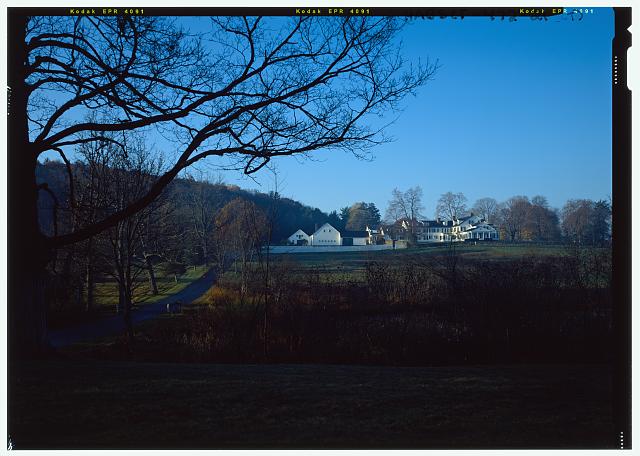
Hill-Stead house and pond, documented in 2006
Hill-Stead house and pond, documented in 2006 — 2006
Image credit & source
Rosenthal, James W. / Library of Congress, Prints and Photographs Division
No known restrictions on U.S. Government HABS photographs; this is a named federal survey photograph, not a copied historical image.
Original source · Reuse terms2006 — later documentation
Hill-Stead Sunken Garden, documented in 2006
Hill-Stead Sunken Garden, documented in 2006 — 2006
Image credit & source
Rosenthal, James W. / Library of Congress, Prints and Photographs Division
No known restrictions on U.S. Government HABS photographs; this is a named federal survey photograph, not a copied historical image.
Original source · Reuse terms2006 — later documentation
Greenhouse workshop and foundations, 2006
Greenhouse workshop and foundations, 2006 — 2006
Image credit & source
Rosenthal, James W. / Library of Congress, Prints and Photographs Division
No known restrictions on U.S. Government HABS photographs; this is a named federal survey photograph, not a copied historical image.
Original source · Reuse terms2006 — later documentation
Hill-Stead farm service road and pond bridge, 2006
Hill-Stead farm service road and pond bridge, 2006 — 2006
Image credit & source
Rosenthal, James W. / Library of Congress, Prints and Photographs Division
No known restrictions on U.S. Government HABS photographs; this is a named federal survey photograph, not a copied historical image.
Original source · Reuse terms2006 — later documentation of a historic place
General view of Pope-Riddle house complex and landscape from east/northeast in color. Note pond in foreground. -…
General view of Pope-Riddle house complex and landscape from east/northeast in color. Note pond in foreground. - Hill-Stead, 35 Mountain Road, Farmington, Hartford County, CT
Image credit & source
James W. Rosenthal / Historic American Buildings Survey, Library of Congress
No known restrictions on images made by the U.S. Government; images copied from other sources may be restricted. https://www.loc.gov/rr/print/res/114_habs.html
Original source · Reuse terms2006 — later documentation of a historic place
View of pond from north/northeast with Pope-Riddle house in background, in color. - Hill-Stead, 35 Mountain Road,…
View of pond from north/northeast with Pope-Riddle house in background, in color. - Hill-Stead, 35 Mountain Road, Farmington, Hartford County, CT
Image credit & source
James W. Rosenthal / Historic American Buildings Survey, Library of Congress
No known restrictions on images made by the U.S. Government; images copied from other sources may be restricted. https://www.loc.gov/rr/print/res/114_habs.html
Original source · Reuse terms2006 — later documentation of a historic place
View from east/northeast of service road between farm and Pope-Riddle house complexes in color. Note bridge at pond…
View from east/northeast of service road between farm and Pope-Riddle house complexes in color. Note bridge at pond on left and Pope-Riddle house in background. - Hill-Stead, 35 Mountain Road, Farmington, Hartford County, CT
Image credit & source
James W. Rosenthal / Historic American Buildings Survey, Library of Congress
No known restrictions on images made by the U.S. Government; images copied from other sources may be restricted. https://www.loc.gov/rr/print/res/114_habs.html
Original source · Reuse terms2006 — later documentation of a historic place
Landscape view to northwest from Pope-Riddle house, in color. - Hill-Stead, 35 Mountain Road, Farmington, Hartford…
Landscape view to northwest from Pope-Riddle house, in color. - Hill-Stead, 35 Mountain Road, Farmington, Hartford County, CT
Image credit & source
James W. Rosenthal / Historic American Buildings Survey, Library of Congress
No known restrictions on images made by the U.S. Government; images copied from other sources may be restricted. https://www.loc.gov/rr/print/res/114_habs.html
Original source · Reuse terms2006 — later documentation of a historic place
Landscape view including pond from north porch of Pope-Riddle house, in color. - Hill-Stead, 35 Mountain Road,…
Landscape view including pond from north porch of Pope-Riddle house, in color. - Hill-Stead, 35 Mountain Road, Farmington, Hartford County, CT
Image credit & source
James W. Rosenthal / Historic American Buildings Survey, Library of Congress
No known restrictions on images made by the U.S. Government; images copied from other sources may be restricted. https://www.loc.gov/rr/print/res/114_habs.html
Original source · Reuse terms2006 — later documentation of a historic place
General view in color of Sunken Garden and Pope-Riddle house from southwest along carriage drive. - Hill-Stead, 35…
General view in color of Sunken Garden and Pope-Riddle house from southwest along carriage drive. - Hill-Stead, 35 Mountain Road, Farmington, Hartford County, CT
Image credit & source
James W. Rosenthal / Historic American Buildings Survey, Library of Congress
No known restrictions on images made by the U.S. Government; images copied from other sources may be restricted. https://www.loc.gov/rr/print/res/114_habs.html
Original source · Reuse terms2006 — later documentation of a historic place
View of Sunken Garden from south in color. - Hill-Stead, 35 Mountain Road, Farmington, Hartford County, CT
View of Sunken Garden from south in color. - Hill-Stead, 35 Mountain Road, Farmington, Hartford County, CT
Image credit & source
James W. Rosenthal / Historic American Buildings Survey, Library of Congress
No known restrictions on images made by the U.S. Government; images copied from other sources may be restricted. https://www.loc.gov/rr/print/res/114_habs.html
Original source · Reuse terms2006 — later documentation of a historic place
View of Sunken Garden from northeast in color. - Hill-Stead, 35 Mountain Road, Farmington, Hartford County, CT
View of Sunken Garden from northeast in color. - Hill-Stead, 35 Mountain Road, Farmington, Hartford County, CT
Image credit & source
James W. Rosenthal / Historic American Buildings Survey, Library of Congress
No known restrictions on images made by the U.S. Government; images copied from other sources may be restricted. https://www.loc.gov/rr/print/res/114_habs.html
Original source · Reuse termsTHE STORY BEHIND THE PHOTOGRAPHS
People, places, and change.
A house conceived through collaboration
Hill-Stead took shape between 1898 and 1901 for industrialist Alfred Pope and his family. His daughter Theodate Pope, later Theodate Pope Riddle, worked with McKim, Mead & White on its design. The Colonial Revival house was part of a larger ensemble of farm and service structures, not an isolated mansion. The estate’s history places a woman’s architectural work within a field in which professional opportunities were sharply unequal. [1] [2]
Art in a domestic setting
Alfred Pope’s collecting brought paintings by French Impressionists into the family home. Hill-Stead’s importance rests partly on the relationship between those works and their domestic setting. Art, furniture, windows and rooms were encountered together rather than as separate objects in a conventional gallery. The house therefore records a particular pattern of late nineteenth-century collecting and display, shaped by industrial wealth and international travel. [1] [3]
The estate beyond the front door
Theodate inherited the property in 1920 and continued to develop its landscape, including work with Beatrix Farrand on the Sunken Garden. Farm buildings, service routes, a pond and greenhouse structures were integral to the place. The gallery uses federal architectural photographs from 2006 as explicitly later documentation of this historic landscape. Their dates remain visible so a visitor can distinguish the age of the subject from the date on which the camera recorded it. [1] [5]
From family property to museum
Theodate died in 1946, leaving instructions that established Hill-Stead as a museum. It opened to the public on April 17, 1947, and the house became a National Historic Landmark in 1991. These events shifted the property from private residence toward public interpretation while preserving a strong sense of its earlier use. The archive focuses on that transformation: the estate is a record of design and collecting, but also of a decision to make a private environment available to future visitors. [4] [1]
Sources & further reading (8)
- National Park Service: Hill-Stead
- National Park Service: Hill-Stead landmark nomination
- Hill-Stead Museum: Collections
- Hill-Stead Museum: institutional history and timeline
- Library of Congress: Hill-Stead HABS documentation
- Library of Congress: Hill-Stead, 35 Mountain Road, Farmington, Hartford County, CT
- Library of Congress: Hill-Stead, Pope-Riddle House Complex, 35 Mountain Road, Farmington, Hartford County, CT
- Library of Congress: Hill-Stead, Farm Complex, 35 Mountain Road, Farmington, Hartford County, CT
Keep the sources close.
Download this collection’s notes, timeline and image credits. Photographs link to their original archives and require an internet connection.
Building dates and photograph dates are recorded separately. Later photographs are identified in their captions; unknown exposure dates remain unknown. Follow each image’s credit and reuse terms.